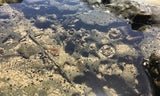
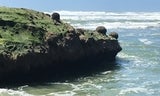
Layers of sandstone that formed at the bottom of the ocean more than five million years ago. Earthquake activity along the legendary San Andreas Fault and lesser known San Gregorio Fault moved these layers up to the bluffs far above the beach.
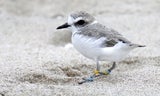
Today wildlife thrives in the park’s habitats. Just offshore, coastal upwellings provide food for humpback and gray whales and other marine life. Several threatened and endangered species live in the Tunitas Creek riparian corridor, including steelhead trout, coho salmon, California red-legged frogs, and San Francisco garter snakes. The wide expanse of sandy beach is often filled with shorebirds, including the threatened western snowy plover; parts of the beach are fenced to protect their nesting habitat.