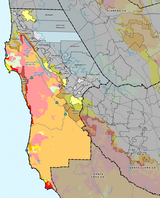
Government Code 51175-89 directs the State Fire Marshal to identify areas in the state as moderate, high, and very high fire hazard severity zones. A local agency is required to designate, by ordinance, moderate, high, and very high fire hazard severity zones in its jurisdiction within 120 days of receiving recommendations from the State Fire Marshal.
Fire Hazard Severity Zones (FHSZ) are divided into State Responsibility Areas (SRA) and Local Responsibility Areas (LRA). State Responsibility Areas: the areas where the state has financial responsibility for wildland fire protection and prevention. Local Responsibility Areas (LRAs) include incorporated cities, urban regions, and agricultural lands where local government is responsible for wildfire protection.
The Fire Hazard Severity Zone (FHSZ) maps are developed using a science-based, field-tested model that assigns a hazard score based on factors that influence fire likelihood and behavior. Many factors are considered, such as fire history, existing and potential fuel (natural vegetation), predicted flame length, blowing embers, terrain, and typical fire weather for the area. See the CAL FIRE webpage on Fire Hazard Severity Zones for more information.
California’s WUI building codes (CBC Chapter 7A) apply to the design and construction of new buildings located in High and Very High FHSZs in Local Responsibility Areas. In addition, Government Code Section 51182 calls for defensible space clearance and other wildland fire safety practices for buildings within Very High FHSZs. Owners are also required to make a natural hazard disclosure as part of a real estate transfer.